Fire Over the Gulf: The Iran–US–Israel War and Its Global Shockwaves
A conflict that began as a targeted military operation has rapidly unravelled into one of the most consequential crises of the 21st century.
Published: March 3, 2026 | World Affairs & Analysis | Read Time: 12 minutes
The Iran–US–Israel war did not begin on February 28, 2026. It began years earlier — in backroom nuclear negotiations, in assassinated scientists, in proxy drone strikes, and in the slow economic strangulation of a nation. But it was on that night that the Iran–US–Israel war finally came out of the shadows and announced itself to the world with fire.
For over two decades, the world watched as Iran and the West engaged in a slow-burning standoff over Tehran’s nuclear ambitions. Sanctions, negotiations, broken treaties, and proxy skirmishes defined the relationship. The United States and Israel launched coordinated airstrikes on Iran under an operation codenamed Epic Fury, targeting military facilities, nuclear infrastructure, and key leadership compounds in Tehran. The scale of the assault — described by military analysts as the largest American force deployment in the Middle East since the 2003 invasion of Iraq — left the world stunned.
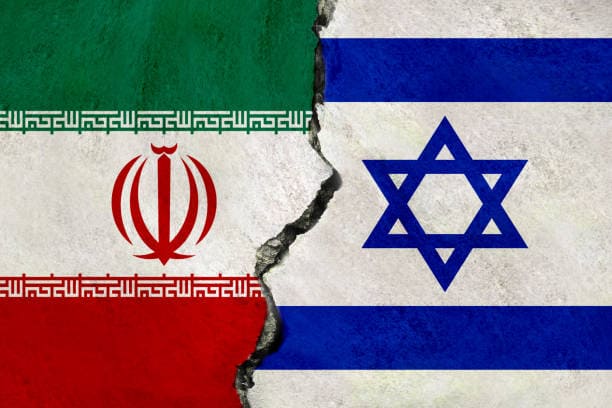
How the Iran–US–Israel War Began: Years of Tension, Days of Fire
The road to the Iran–US–Israel war had been paved with accelerating crises. Israel and Iran had exchanged direct strikes in 2024, followed by a 12-day air conflict in mid-2025 in which the US bombed Iranian nuclear sites. Anti-government protests erupted across more than 100 Iranian cities in late December 2025, driven by economic collapse and the crash of the rial. Then, during a State of the Union address on February 24, 2026, President Trump accused Iran of reviving efforts to build nuclear weapons and warned that the US was prepared to act.
Among the most seismic outcomes of the opening strikes of the Iran–US–Israel war was the death of Supreme Leader Ayatollah Ali Khamenei, who had ruled the Islamic Republic for over three decades. Iranian state broadcasters delivered the news in tears. Within hours, Iran’s Supreme National Security Council had established a three-person temporary leadership council and vowed that there would be “no mercy” in the response.
Operation Epic Fury: How the Iran–US–Israel War Unfolded in Three Days
The strikes that launched the Iran–US–Israel war began on the night of February 28. By Day 2, Israel’s air force had dropped more than 1,200 munitions across 24 of Iran’s 31 provinces. US destroyers launched Tomahawk cruise missiles. NATO AWACS aircraft were reportedly surveilling Iran from Turkish airspace, though Ankara publicly denied involvement.
Iran’s retaliation was swift and broad. The Islamic Revolutionary Guard Corps launched missile and drone barrages at Israel and at US military bases across the Gulf region. Facilities in Bahrain, Qatar, Kuwait, and Saudi Arabia all came under fire. The US Embassy compound in Kuwait was struck. Qatar shut down LNG production after drones hit key facilities. Qatar Airways grounded all flights indefinitely.
By the third day of the Iran–US–Israel war, the human toll was growing: at least 555 people killed in Iran, 11 dead in Israel, 31 in Lebanon, and 6 American service members killed in action. President Trump told media that the conflict was expected to last around four to five weeks and did not rule out the possibility of ground troops if “necessary.” Iran’s security chief flatly rejected any prospect of peace talks, while Trump said Iran’s new leadership had signalled a desire to resume dialogue.

The Strait of Hormuz: The Economic Flashpoint of the Iran–US–Israel War
If the missiles made global headlines, it was the fate of a narrow strip of water between Iran and Oman that truly terrified economists and world leaders. The Strait of Hormuz — just 21 miles wide at its narrowest point — carries approximately 20 million barrels of oil per day, representing roughly 20% of global petroleum consumption. Around 22% of the world’s traded liquefied natural gas also transits this chokepoint. The Iran–US–Israel war had struck at the very heart of the global energy system.
Within hours of the opening strikes, Iran’s IRGC transmitted warnings to all vessels: no ships would be permitted to pass. Shipping giants including Maersk, Hapag-Lloyd, MSC, and CMA CGM immediately suspended transits. Insurance premiums surged to six-year highs. By March 2, vessel tracking showed essentially zero tanker traffic through the strait.
The economic fallout from the Iran–US–Israel war was immediate. Brent crude oil surged more than 9% to nearly $80 per barrel, with JPMorgan warning it could hit $120 per barrel if disruptions persist beyond three weeks. Deutsche Bank analysts suggested prices could approach $200 per barrel in a worst-case scenario. European natural gas futures soared more than 40% in a single session. Petrol prices at the pump are expected to rise 10 to 30 cents per gallon across the United States within days. China, India, Japan, and South Korea together account for nearly 70% of all crude flowing through the strait — making Asia the most acutely exposed region to this crisis.
How the Iran–US–Israel War Has Set the Middle East on Fire
The Iran–US–Israel war has not remained contained to Iran. Israeli air strikes in Lebanon have killed at least 31 people and wounded 149, as Iran-backed Hezbollah launched fresh rockets across the northern border. The Houthis in Yemen have threatened to target US and Saudi military facilities. Jordan’s armed forces intercepted 49 drones and ballistic missiles entering their airspace.
Saudi Arabia confirmed Iranian strikes on both Riyadh and the Eastern Province — home to its critical oil infrastructure. Dubai’s international airport and several hotels were hit by retaliatory strikes. Bahrain, Qatar, and the UAE have all sustained attacks. Western governments are rushing to evacuate their citizens, with the US State Department issuing an urgent call for all Americans in the Middle East to leave immediately.
The Iran–US–Israel War and the Global Political Divide
The Iran–US–Israel war has carved clear fault lines across the international community. NATO Secretary General Mark Rutte declared the operation “crucial for security in Europe,” and most Western leaders publicly backed the campaign. China and Russia took the opposite view — Chinese Foreign Minister Wang Yi called the strikes “unacceptable,” and both nations have long-standing energy and trade ties with Tehran.
At home in the US, Congress is divided. Democratic legislators have been sharply critical, arguing the administration “has no plan for the chaos that is unfolding.” Legal scholars have questioned the constitutional basis for the strikes, noting that Congress alone has the authority to declare war and that no such authorization was granted.
The death of Khamenei has opened a profound political vacuum inside Iran. The country’s clerical establishment must now choose a new Supreme Leader — a process with no clear timeline and no obvious successor — while simultaneously managing military operations, a collapsing economy, and a population that only weeks ago was staging the largest protests since the 1979 revolution.

What Happens Next in the Iran–US–Israel War?
The trajectory of the Iran–US–Israel war remains deeply uncertain. Trump has said it could last up to five weeks, though he added it would continue “as long as necessary” to destroy Iran’s ballistic missile programme and ensure it cannot rebuild a nuclear weapons capability. OPEC+ has pledged to increase output to try to stabilise energy markets, but analysts note that much of the region’s spare capacity sits behind the now-closed Strait.
The Iran–US–Israel war is no longer just a regional conflict. It is a stress test for the global energy system, for international law, for the unity of the Western alliance, and for the future of the Middle East. For energy-importing nations across Asia, the economic pain is already arriving. For the people of Iran, Israel, and the broader Gulf, the human cost is escalating by the hour.
History has often turned on such moments — when the calculations of leaders collide with the chaos of war, and what was designed as a surgical strike spirals into something no one fully controls. The Iran–US–Israel war of 2026 may be just such a moment. The fires over the Gulf are burning, and the world is watching.
External Links
https://www.iaea.org/newscenter/focus/iran
https://www.cfr.org/backgrounder/us-iran-relations
https://www.bbc.com/news/world-middle-east-33521655