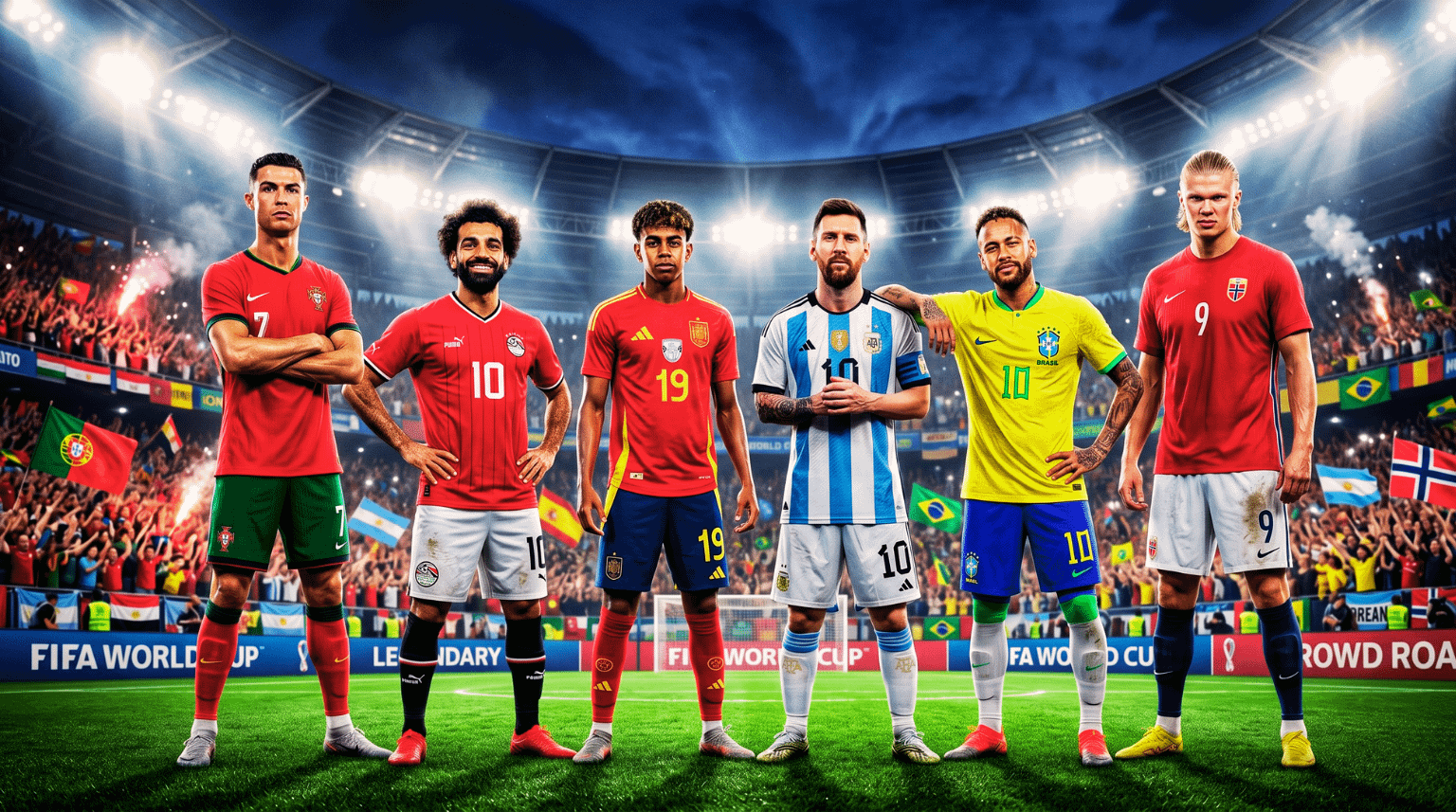
Why the FIFA World Cup 2026 Is a Marketing Event Like No Other
There are sporting events, and then there is the FIFA World Cup 2026. The 2026 FIFA World Cup will be the biggest football event in history, with 48 teams playing 104 matches across 16 host cities in the United States, Canada and Mexico. Analysts predict more than six billion people will follow the tournament, and over 6.5 million will attend games in person. The FIFA World Cup 2026 is poised to become the most commercially powerful sporting event in history, with FIFA anticipating record-setting revenue, as marketing and sponsorship contracts alone are projected to produce approximately $2.5 billion to $3 billion. For brands, marketers, and advertisers at every level, this is not merely a tournament. It is a once in a generation window to reach the largest, most diverse, and most digitally connected audience in the history of global sports marketing. If you are in the business of reaching people, whether through digital advertising, social media marketing, content strategy, or brand partnerships, the World Cup 2026 is the single biggest opportunity of this decade. And the brands that move now will be the ones remembered long after the final whistle.
The Scale: Why This World Cup Changes Everything
To understand why the FIFA World Cup 2026 marketing opportunity is so unprecedented, you first need to understand the sheer scale of what is about to happen. FIFA World Cup 26 will be the largest and most ambitious tournament in history with lots of firsts. It is the first World Cup hosted across three countries (the United States, Mexico and Canada), the first with 48 teams, and the first time it will take place in 16 host cities including Mexico City, Miami and New York. Mexico will host the Opening Match on Thursday June 11th in Mexico City, where 13 matches will take place across the tournament. Canada will also host 13 matches beginning with an opening on June 12th at Toronto Stadium. The United States will host 78 matches, starting with an opening game on June 12th 2026 at Los Angeles Stadium. The final game will be held July 19th in New York New Jersey. The 2026 FIFA World Cup represents an unprecedented economic milestone in the history of global tournaments, with total revenues expected to exceed $80 billion, driven by the expansion of the tournament to 48 teams and the accompanying surge in fan engagement and investment. According to joint reports issued by FIFA and the World Trade Organization, the tournament is expected to attract approximately 6.5 million visitors to 16 cities, with direct spending approaching $13.9 billion, contributing an estimated $40.9 billion to global GDP and creating more than 824,000 full time jobs. This is not a weekend event. From an advertising perspective, the World Cup is not a single event. It is a six week global conversation that dominates news cycles, social platforms and cultural spaces. For anyone building a World Cup marketing strategy, the window of attention is massive and continuous, stretching from early June to late July.
The Revenue Machine: Where the Money Flows
Understanding the FIFA World Cup 2026 revenue picture is critical for any brand considering activation. The 2026 FIFA World Cup will be the most lucrative in history, with revenues expected to exceed US $10.9 billion. The event’s revenue projections reveal the tournament’s economic magnitude: $4.3 billion from broadcast rights, $2.8 billion from sponsorships, and an estimated $3 billion from ticket sales, more than triple the $950 million generated in Qatar. FIFA projects total commercial revenue from the 2026 tournament, including broadcasting rights, sponsorships, and licensing, at approximately $11 billion globally. Major US-based brands have secured marquee World Cup sponsorships, including American Airlines, Home Depot, Bank of America, and Diageo, reflecting the commercial community’s recognition of soccer as a fast-growing segment of the US sports market. The financial architecture alone tells you everything you need to know about why every serious marketer should be paying attention. This is not a niche sports sponsorship play. It is a full-blown global advertising ecosystem generating billions across every channel imaginable.
The Sponsorship Landscape: Who Is Already In
The biggest brands on the planet are already locked in, and their strategies reveal what the smartest marketers consider the winning playbook. Tier 2 FIFA World Cup 2026 Sponsors with global rights for 2026 include AB InBev (Budweiser), Bank of America, Frito-Lay (Lay’s), Hisense, McDonald’s, Mengniu Dairy, Unilever (Dove Men+Care), and Verizon. Confirmed partners include long standing global brands across apparel, payments, automotive, technology and consumer goods. Names such as Adidas, Coca-Cola, Visa, Hyundai Kia and McDonald’s continue their long term association with FIFA. Notably, Tier 2 sponsorship deals typically range between $65 million and $95 million, while top-tier partners invest significantly more. The Coca-Cola Company has been involved in stadium advertising at every FIFA World Cup since 1950. Ferrero North America is investing $100+ million in sports marketing, with campaigns tied to both the Super Bowl and the World Cup. The sheer volume of brand investment signals that the world’s most sophisticated marketers see this as the premier advertising opportunity of the entire 2020s decade.
Advertising Trends: What the Smartest Brands Are Doing
With the 2026 FIFA World Cup just months away, the advertising landscape is only beginning to take shape. Of the 20 official sponsors across three sponsorship tiers, more than half have yet to release creative, signaling that the bulk of campaign spend and storytelling is still to come. Early campaigns do however offer a strong read on the themes, talent strategies, and playbooks brands are already leaning into. Fan-first storytelling is emerging as the dominant theme, with many brands pairing athletes and everyday fans to build excitement ahead of the tournament. Among celebrity-led campaigns, global football icons are leading the charge. Lionel Messi dominates early creative, appearing across multiple campaigns (Adidas, Michelob Ultra, and Lay’s), while David Beckham (Lay’s, Verizon) and Thierry Henry (Kia, Lay’s) are also featured prominently. But it is not just about athletes. Brands are increasingly pairing sports stars with entertainment talent to broaden appeal, a tactic seen driving top-performing Super Bowl campaigns. Lay’s brought together a roster of football icons alongside Steve Carell, while Dove Men+Care paired Marshawn Lynch with Trinity Rodman. While football legends dominate early creative, the next generation remains largely absent. Adidas stands out as the only brand featuring emerging talent like Lamine Yamal and Florian Wirtz. This presents a clear opportunity. Rising players are critical for connecting with Gen Z audiences, and as the tournament nears, brands that invest in introducing next-gen talent may unlock new levels of fan engagement.
Digital Marketing and Social Media: The Real Battlefield
If the stadiums are the heart of the World Cup, then social media is its nervous system. The tournament will be Unilever’s biggest social media activation yet, with TikTok ready to make the most of its FIFA preferred partner deal. The deal means TikTok will have greater access to World Cup coverage, including increased original content, with the hope it becomes the go-to place for fans and creators throughout the tournament. There is also huge scope for smaller, non-sponsor brands to play a key part in the conversation. Brands’ investment in social media marketing has skyrocketed in recent years, with 81% of UK brands planning to increase their influencer marketing budgets in 2026. Nielsen data shows that 76% of football fans are Millennials or Gen Z and 64% track sponsors and prefer sponsor brands when making purchases. With video views for global football increasing 453% over five years, digital platforms are essential. The data speaks for itself. Messaging aligned with cultural moments drives approximately 23% higher recall. Emotionally relevant messaging and placements yield approximately 18% stronger engagement. Brands that activate around defining sports moments see 2.7x higher favorability and up to 3x greater purchase intent. The implication for digital marketers is clear. If you are not building a World Cup 2026 social media strategy, you are leaving massive brand awareness, engagement, and conversion opportunities on the table.
How Brands Can Activate Without Official Sponsorship
Here is the truth that every small business and mid-sized brand needs to hear. You do not need an official FIFA sponsorship to win during the World Cup. Brands can activate through OOH, digital media, content and ambassador strategies without using FIFA intellectual property. There is a well established space between official sponsorship and infringement. Many brands operate in this area by focusing on football culture rather than the tournament itself. The 2026 World Cup will create one of the biggest shared attention windows businesses get all year. You do not need official sponsorship rights to benefit from it. You need a clear role, fast creative, a local offer, and a way to keep the audience moving from feed to action. Ambush marketing works when it relies on agility, cultural insight, and timing. A well executed idea can deliver a higher ROI than some official sponsorship campaigns. The key takeaway for any brand activation strategist is that this is not a walled garden. The World Cup marketing ecosystem has room for everyone, from multinational corporations to local restaurants creating match-day watch party experiences.
SEO and Content Marketing: The Organic Traffic Gold Rush
The search traffic opportunity around the FIFA World Cup 2026 is enormous and it has already started building. Search interest around the FIFA World Cup spikes dramatically 12 to 18 months before the tournament and explodes during match weeks. Brands should create long-form pillar content targeting keywords like FIFA World Cup 2026 schedule, how to buy FIFA World Cup tickets, and World Cup 2026 host countries, publish match-day blogs, player stats, and bracket predictors to drive organic traffic, and optimize for local SEO in host cities. Marketers should start their content calendar 6 to 12 months before the tournament because SEO content takes time to rank, create a dedicated landing page targeting FIFA World Cup 2026 keywords for organic and paid traffic, and use countdown timers and urgency-based copy in email campaigns leading up to kick-off. Whether you are a digital agency, an ecommerce brand, a travel company, or a local business in a host city, the World Cup 2026 SEO opportunity is one that rewards early movers. Brands that publish high-quality, keyword-rich content now will dominate search results when the billions of queries start flooding in this June.
Real-Time Marketing: Speed Wins the World Cup
One of the defining characteristics of World Cup marketing in 2026 is the shift toward real-time activation. Successful brands combine content planning with real-time response. Dynamic Creative Optimization adapts creatives to scoreline, location, and language. Social listening identifies relevant fan moments within seconds. A well-oiled World Cup Moments Engine, a data platform that ingests live and historical World Cup data, transforms real-time match data into actionable marketing signals. Dynamic creative optimization instantly tailors messaging to the moments as they happen on the pitch. The brands that will win are the ones harnessing technology to build dynamic, data-driven strategies that respond in real-time. The World Cup 2026 opens up enormous opportunities for brands because it consistently combines global attention with local context for the first time. Host cities, fan zones, and digital touchpoints enable relevance exactly where attention arises. At the same time, the demands for speed and precision increase significantly, because brands without real-time capability quickly lose visibility and miss decisive moments. In a tournament that stretches for 40 days across three countries, the brands that can respond to viral goals, controversial calls, and breakout player moments within minutes will dominate the social media conversation and earn disproportionate brand recall.
The Fan Experience Economy: Activations Beyond the Screen
The World Cup 2026 is not just a digital event. It is a physical, emotional, multi-sensory experience unfolding across 16 cities simultaneously. Pop-up fan zones and AR experiences, including small-scale versions of FIFA fan festivals, featuring interactive challenges, projection mapping and augmented-reality penalty games, can bring the World Cup atmosphere to local parks and shopping districts. Brands can replicate such experiences months ahead of 2026, giving fans a taste of what is to come.1 Home Depot revealed plans to bring activations to multiple host cities across North America, from Monterrey to Atlanta to Toronto. These will include outdoor viewing parties and DIY fan zones, tailored to the local city’s culture and community. “Soccer is the fastest-growing sport in the U.S., and the 2026 World Cup will be one of the largest sporting events ever held,” said Home Depot’s senior sports marketing manager, adding that sponsorship gives them a platform to engage fans through “community-focused activations, performance media, and brand storytelling.” Whether it is a pop-up fan zone, an AR penalty shootout, a local watch party with branded giveaways, or a city-wide scavenger hunt tied to match days, the experiential marketing opportunities are limited only by creativity.
Industries That Stand to Benefit Most
The ripple effects of the FIFA World Cup 2026 will be felt across nearly every industry, but certain sectors are positioned for outsized gains. Fintech and Payments brands have a natural marketing hook with international visitors spending across three countries. Sports Tech and Apps including fantasy football, sports analytics, and streaming apps should run World Cup specific features to spike user acquisition. Digital Agencies should pitch World Cup content strategies to clients across verticals because the search traffic opportunity is enormous. The FIFA World Cup presents opportunities across SEO and content marketing, social media campaigns, influencer partnerships, paid digital advertising, and ecommerce sales. Brands can target massive global audiences with football-themed content, limited edition products, and travel and hospitality packages. Additionally, hospitality, food and beverage, sportswear, automotive, consumer electronics, and retail brands all have organic connection points to the tournament that make World Cup marketing feel natural and authentic rather than forced.
The Long Game: Building Brand Equity Beyond the Tournament
The smartest marketers know that the World Cup is not just a short-term spike. It is a launchpad for long-term brand building. For many brands, the World Cup serves as an entry point into football advertising. It provides a concentrated period to test messaging, markets and channels before committing to longer term partnerships. This might lead to future involvement in domestic leagues, club partnerships or ambassador relationships. The momentum created during the World Cup can be carried into sustained football strategies across seasons. Global sporting events generate intense but temporary attention. Brands that treat the World Cup as a short-term campaign risk missing the long-term value of that engagement. Interactive campaigns, localized activations, and opt-in experiences allow marketers to convert that engagement into lasting audience relationships. The brands that approach the FIFA World Cup 2026 as a content season rather than a one-off advertising push will walk away with deeper customer relationships, richer first-party data, larger email lists, stronger social followings, and measurable lifts in brand preference that persist well beyond July 2026.
Your World Cup 2026 Marketing Checklist
If you are a brand, agency, or marketer preparing to activate around the FIFA World Cup 2026, here is a condensed action plan built from the strategies the world’s leading brands are already deploying. Start your content calendar now because SEO takes months to build ranking authority. Build a dedicated World Cup landing page optimized for high-volume keywords like FIFA World Cup 2026 schedule, World Cup 2026 tickets, and World Cup host cities. Choose your lane and decide whether your brand will host the moment, inform the fan, equip the viewer, or fuel the celebration. Invest in short-form video across TikTok, Instagram Reels, and YouTube Shorts because that is where the conversation will live. Set up a social media war room for real-time marketing during matches. Plan fan engagement activations, whether physical or digital, that invite participation and generate user-generated content. Prepare Dynamic Creative Optimization so your ads can adapt to match outcomes, trending players, and viral moments in real time. Build a post-tournament nurture plan to convert World Cup attention into lasting customer value.
Final Thoughts: The Opportunity Is Now
The 2026 FIFA World Cup will be more than a sporting event. It will be a global celebration of culture, technology and community. To stand out in this crowded landscape, marketers must plan early, think creatively and embrace fan participation. For brands, this is a once-in-a-generation opportunity to reach diverse, passionate and digital-first fans. The numbers do not lie. Six billion viewers. Eleven billion dollars in revenue. Over 100 matches. Forty days of nonstop global conversation. Three host countries. Sixteen host cities. And an entire planet watching. The FIFA World Cup 2026 is not just the biggest advertising opportunity of the decade. It is the biggest marketing moment most of us will experience in our careers. Whether you are a global brand with a nine-figure budget or a local business looking to ride the wave of World Cup energy in your city, the time to start planning is not next month. It is right now. The ball is about to drop. Make sure your brand is on the pitch.
If you liked this article. Please make sure to read our other blogs too.